Bringing lab collection kits into the clinic
Clinics that draw their own blood were buying supplies outside Fullscript. I designed ordering and activation for in-office lab kits; in-clinic collection now converts at 96%.
Senior Product Designer — Labs (kits design lead) · August 2024 – January 2026
Practitioners who draw blood in their own clinic had to source collection supplies from third parties, track inventory by hand, and coordinate specimen logistics outside the platform their labs already ran on.
I ran discovery first, then designed wholesale ordering around how clinics stock — familiar commerce patterns, hard operational limits turned into guardrails, and a physical artifact treated as part of the product.
The top kit logged hundreds of orders during the pilot, kits reached general availability in January 2026, and the research seeded the in-office phlebotomy work that continues today.
The segment Labs skipped
Labs launched with mobile phlebotomy and lab visits — both of which route the patient away from the clinic. A large segment of integrative practitioners already draw blood in-office and needed supplies, not services. Kits extended Labs into that segment: wholesale collection supplies, ordered and restocked inside the platform, with Fullscript's logistics behind them.
Clinics stock, they don't shop
I booked discovery sessions the week the kits work opened, and they changed what I thought I was building. Clinic operators think in inventory, not orders: what's on the shelf, what runs out mid-day, what to reorder before it does. So I designed a restocking workflow that follows that rhythm, not a store for kits.
Commerce patterns, not a supply portal
Some practitioners expected a medical-supply portal — dense tables, catalog numbers, quote requests. I built the catalog on commerce patterns they already know instead: browse, product card, cart, styled to the Labs design language. It signals less clinical authority than a supply portal would, a trade I took for a product whose whole job is reorders nobody has to help with.
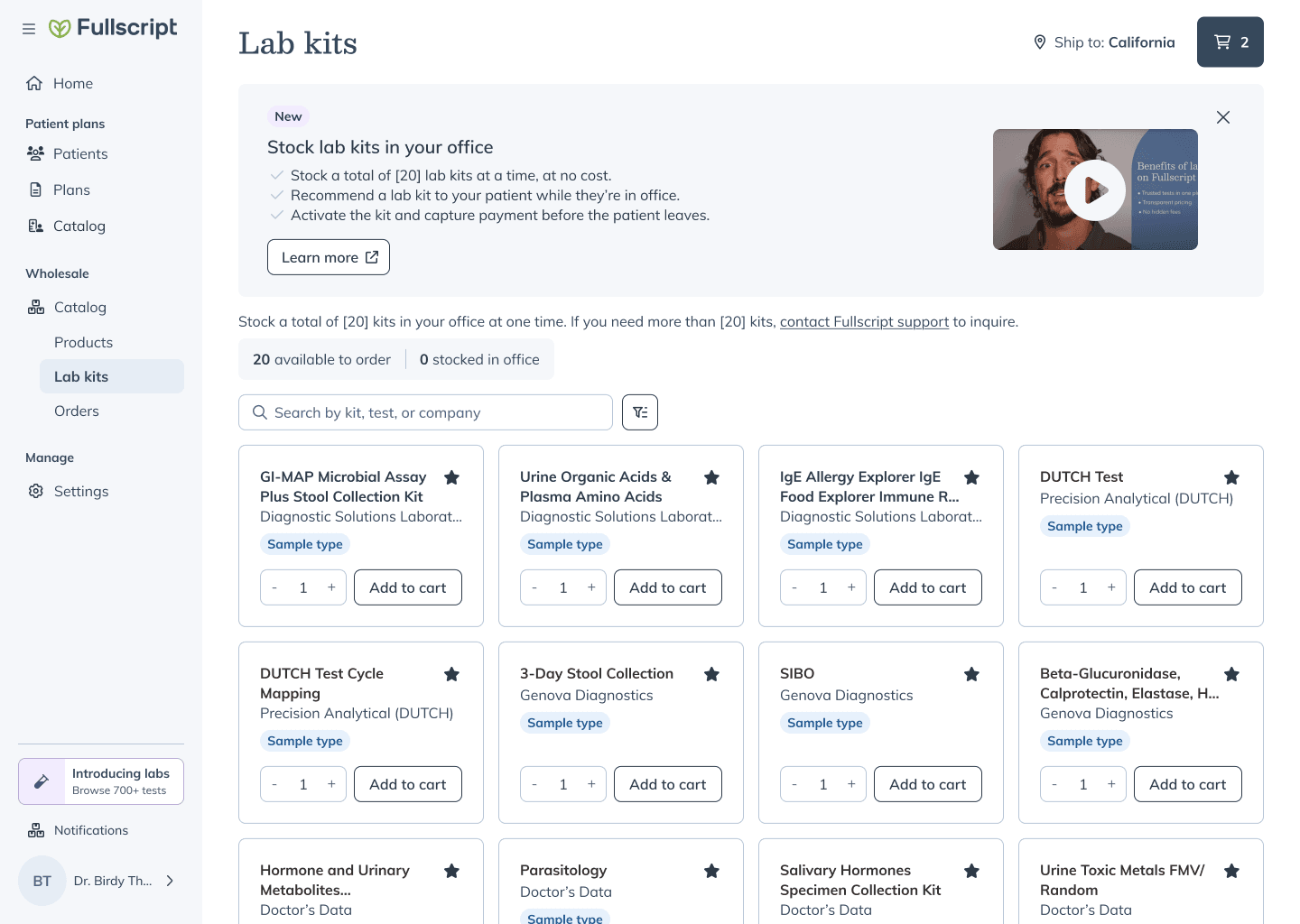
The wholesale catalog uses commerce patterns practitioners already know, so a first order shouldn't need training Showing the 20-unit cap early
Supply chain capped carts at 20 units per kit, and enforcing that at checkout, the standard build, turns it into a last-second rejection for someone stocking a clinic for the month. I surfaced the limit early, in context, with copy that says what to do about a larger order. That meant more states to design and build, in exchange for a limit that reads as guidance instead of failure.
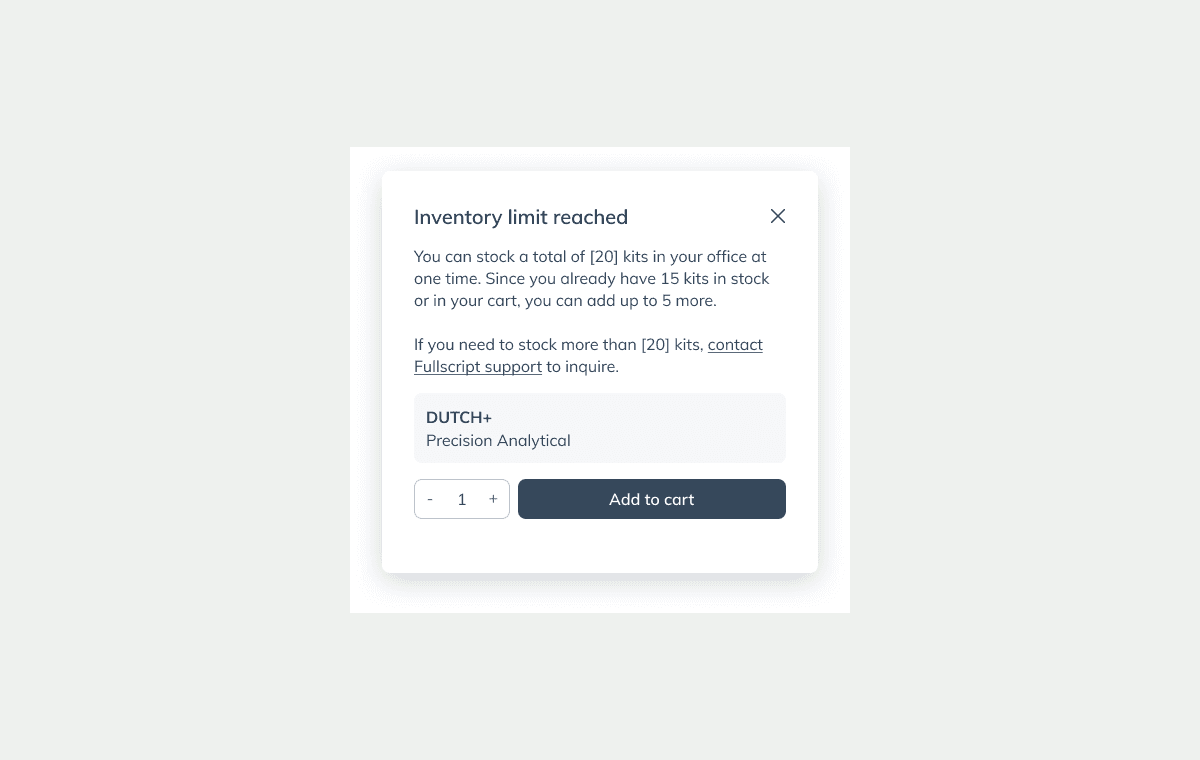
The 20-unit cap surfaces during ordering with specific copy — a guardrail met early, not a rejection met at checkout Three activation paths, not one
Practitioners arrive at kits from meaningfully different contexts: a direct link from the team, a patient's profile, or the catalog. One unified onboarding was cheaper to build, but every entry point would carry the wrong assumptions for 2 of the 3 audiences. So each got its own activation path — 3 times the surface to maintain, and each practitioner lands in a flow that matches their intent.
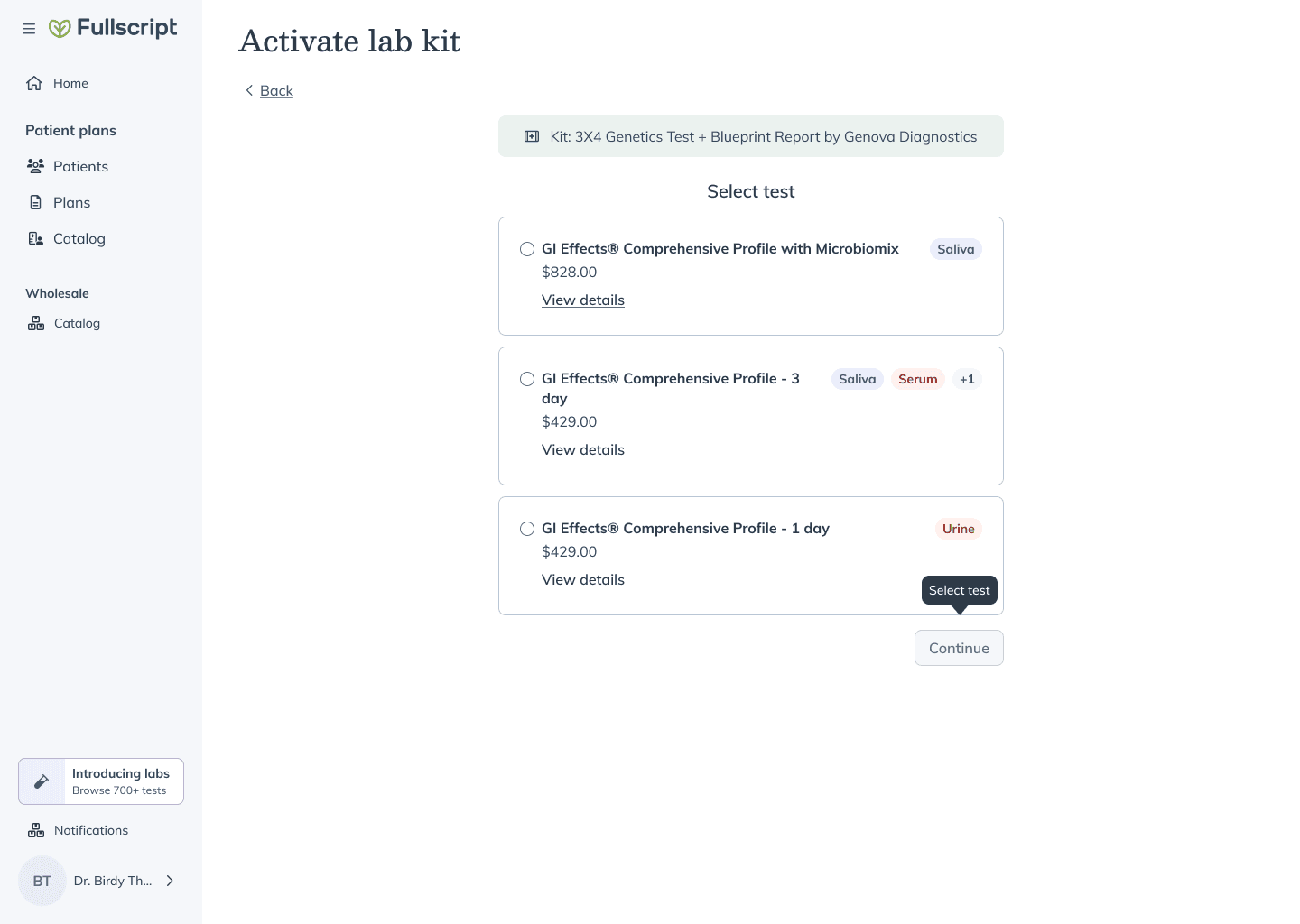
Activating a stocked kit: pick the test, then hand it to the patient — one of the three paths a practitioner can enter from Arguing for a sticker
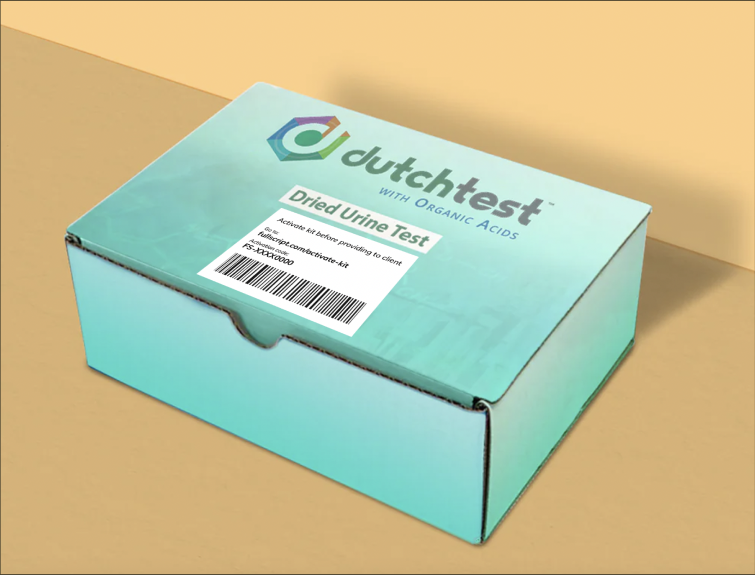
Part of the deliverable was physical: the kit box sits on a clinic shelf for weeks, the only piece of Fullscript in the practitioner's room between orders. I treated the sticker on every box as an afterthought at first, then went back and gave it the same care as a screen. I had to argue for it like a feature, which felt slightly absurd at the time and less so once the boxes started arriving.
Research before the draws brief
In-office draws could have started from a brief; the demand was already loud. But the workflow crosses practitioner, patient, and courier, and a brief written before research would have encoded guesses about the messiest parts, so I ran practitioner interviews and a discovery workshop first. The workshop shaped the roadmap, and draws shipped in 2026, after my part had ended.
Designed for panels, used for singles
The 20-unit cap and the wholesale catalog both assume a clinic stocking a month of panels. The platform's numbers say otherwise: a kit plan carries under two test recommendations where a phlebotomy draw carries nearly nine, and single-marker orders convert lowest of any order shape while five to eight markers peak — so the one-off kit order sits in the worst-converting density band. The ordering model was right; my mental model of what gets ordered was wrong.
Outcomes and impact
Metabolic panelMost-ordered kit in the pilot
It logged hundreds of orders, with CBC and estradiol behind it — routine bloodwork, not the specialty testing the category was known for.
January 2026General availability
Kits graduated after about a year of piloting.
Practitioners can now stock their clinic from the same platform that runs their labs — browse, order, restock — which opened Labs to the segment the phlebotomy model skipped. Two years on, in-clinic collection is the highest-converting lab motion on the platform: 96% of those plans convert inside 30 days, roughly 30 points above the platform baseline. That is the segment's own behavior showing up in the data, not a result I get to claim for the design.
Designing for the second order
Reorder flows, quantity caps, and activation paths never make a highlight reel. I treated the second order, not the first, as the design target: clinics restock on rhythm, and every reorder that needs help breaks it.